
Is It Normal?
Almost always, yes. Smelly gas by itself is usually normal human digestion. This page is here to help you quickly sort everyday patterns (food, timing, stress, how fast you eat) from true red-flag combos like pain, fever, blood, big bathroom changes, or weight loss. Scroll down for simple examples, a clear red-flag list, and when it's time to talk to a real clinician instead of doom-scrolling.
Next: Short-Term Helpers (easy things to try) · If odor is the main issue, see Why Farts Smell.
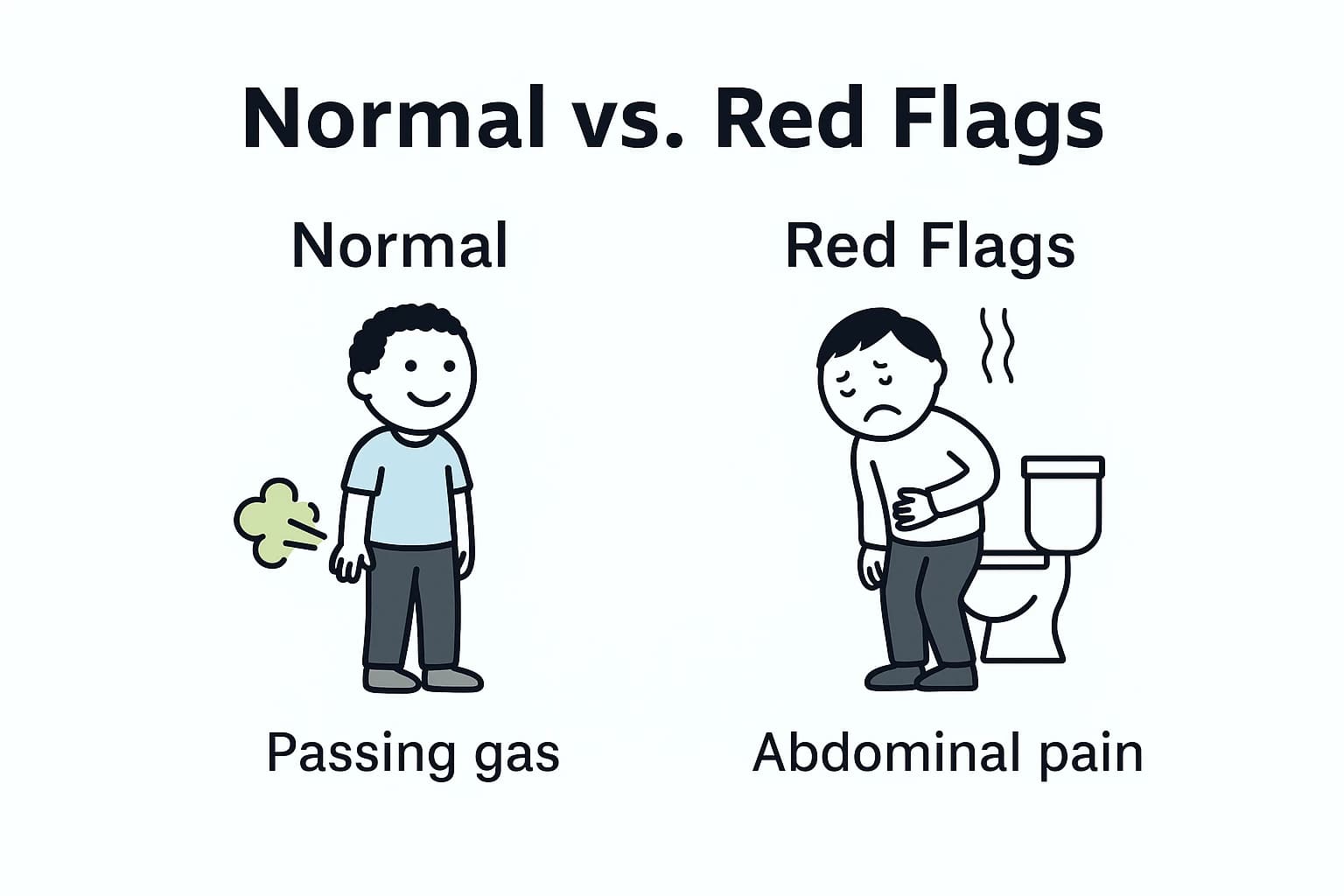
Stuff that's normal
- You ate eggs / garlic / broccoli / cabbage today, and now things are spicy. That tracks.
- You swallowed extra air because you ate fast, talked while chewing, chewed gum, used straws, or slammed fizzy drinks.
- You feel pressure after a huge late dinner and lying down right away.
Time yourself when you eat. Slow down for 48 hours. Put the fork down between bites. See if less air = less pressure.
Sip water through the day. When digestion moves at a normal pace, gas doesn't sit and "ferment" as long. Staying hydrated can help things move instead of feeling stuck.
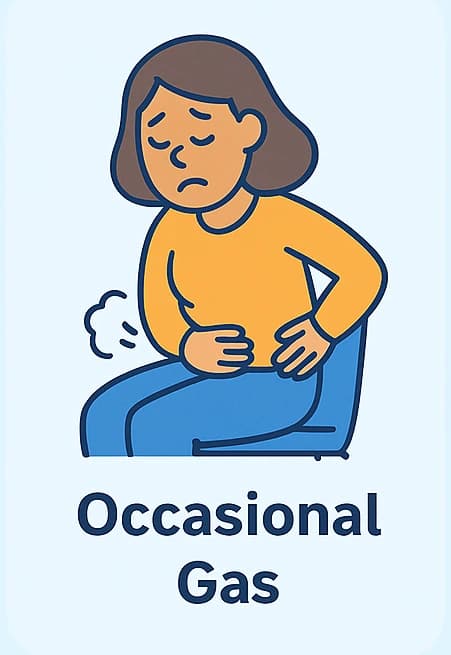
When should I talk to a doctor?
- Sudden, sharp belly pain that won't let up.
- Poop that looks black/tarry or has obvious blood.
- Fever plus belly pain plus just feeling awful, weak, or "off."
- Ongoing change in bathroom habits — like diarrhea that keeps going or you basically stop being able to poop — and it's lasting for days and not improving.
- Unexpected weight loss without trying.
Those are "don't ignore it" signs. Call a medical professional or urgent care / telehealth.
"Jay" had a giant late dinner before a first date and woke up bloated and panicked. The next week they ate a little earlier, skipped fizzy drinks, and took a short walk after dinner. Morning smell dialed down — and the social anxiety did too, because they realized a lot of the stress was "what if I reek in front of this person." Sometimes fear itself makes you hyper-focus on normal gas.
FAQ
"Should I jump straight to elimination diets?"
Usually no. Start with small, reversible tweaks: slow down eating, watch carbonated drinks before stressful stuff, try an earlier dinner, add gentle walks, get water in.
If you still feel wrecked, you can try a short, structured low-FODMAP style test with help from a clinician or a registered dietitian. That means: temporarily pull back certain carbs (garlic, onion, some fruits, some wheat products) for a short window, then add them back one group at a time to see which specific groups bother you the most. You're not supposed to permanently ban entire food groups without guidance.
Reminder: this is general info, not personal medical advice.