
What is FODMAP?
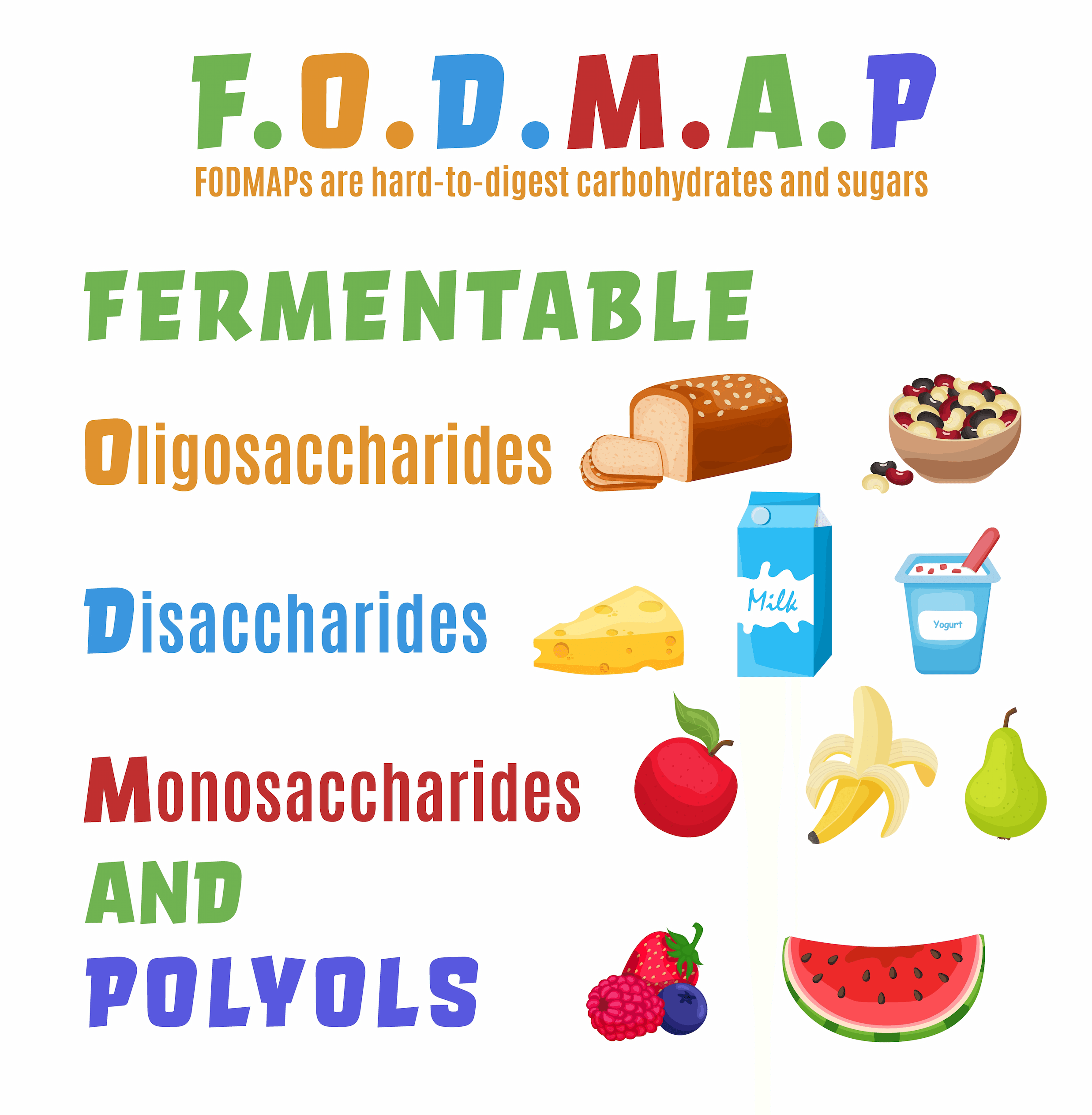
FODMAP stands for "Fermentable Oligosaccharides, Disaccharides, Monosaccharides And Polyols." That's a mouthful. Translation: a group of carbs that some people's guts struggle to absorb. When those carbs reach the lower intestine undigested, bacteria party on them and make gas.
People with IBS-like symptoms sometimes feel way better if they dial in which specific FODMAP groups bug them.
Helpful next steps: Low-FODMAP Snacks · The Fiber Ladder.
Who should even care about FODMAP?
If you're mostly fine and just had one smelly week after broccoli and eggs, you probably don't need to stress FODMAP. If you're constantly bloated, running to the bathroom, or scared to leave the house after certain meals, this is where FODMAP talk can help.
How a calm FODMAP trial usually works
- Short pause: For a brief window (often 2–3 weeks under guidance), you pull back on several common trigger groups at once — like onion/garlic, certain fruits, certain wheat products, certain dairy. You're not starving. You're just simplifying.
- Add back one group at a time: After that pause, you add back one group (like onion/garlic, or wheat, or certain fruits) and see how your body reacts. That tells you which specific bucket is a bully for you.
- Personalize: The goal is NOT "never eat garlic again." The goal is "okay, garlic at dinner wrecks me, but tiny garlic-infused oil is fine," or "I can handle wheat at lunch, just not at night."
Most people do best with a registered dietitian or a trusted guide (for example, many people follow the Monash-style low-FODMAP method) because it's easy to under-eat if you guess alone. We're giving high-level info, not a medical plan.
High-FODMAP foods that often cause gas or smell (watch portions)
These foods are common triggers for gas, bloating, or sulfur smell in some people. Tiny amounts are often fine. If you're cutting lots of foods, talk to a clinician or a dietitian — this is not medical advice.
- Garlic and onion: They're in almost everything and are top FODMAP offenders.
- Wheat products: Bread, pasta, pastries — not the same as gluten allergy, but sometimes overlaps.
- Certain fruits: Apples, pears, cherries, mango, watermelon.
- Dairy products: Milk, ice cream, soft cheeses (lactose = FODMAP).
- Certain legumes: Beans, lentils, chickpeas.
Portion size matters. If you eat double the portion you might feel worse. Apps (like the well-known Monash app) track serving sizes in more detail.
"Dee" tried a short structured pause: simpler breakfasts, no big onion/garlic chunks at dinner (they used garlic-infused oil for flavor instead), and fewer giant late-night meals. Then they added foods back one group at a time. Result: big onion portions at night were the main culprit. Eggs were totally fine most days. Dee didn't quit eating — they just tweaked timing and portion.
Reminder: this is general info, not personal medical advice.
For exact portion sizes and how to test foods back in one at a time, check the Monash FODMAP app from Monash University — they're the team that originally developed the low-FODMAP diet in clinical research.