
Silent but Science
Let's zoom out and talk about what's actually happening in your gut. Gas comes from swallowed air and normal fermentation of carbs in the colon. Some foods make more gas; timing, pace, and portions matter too. This isn't medical advice—just simple biology in plain English so the weird stuff feels less scary. If you notice red flags, talk to a clinician.
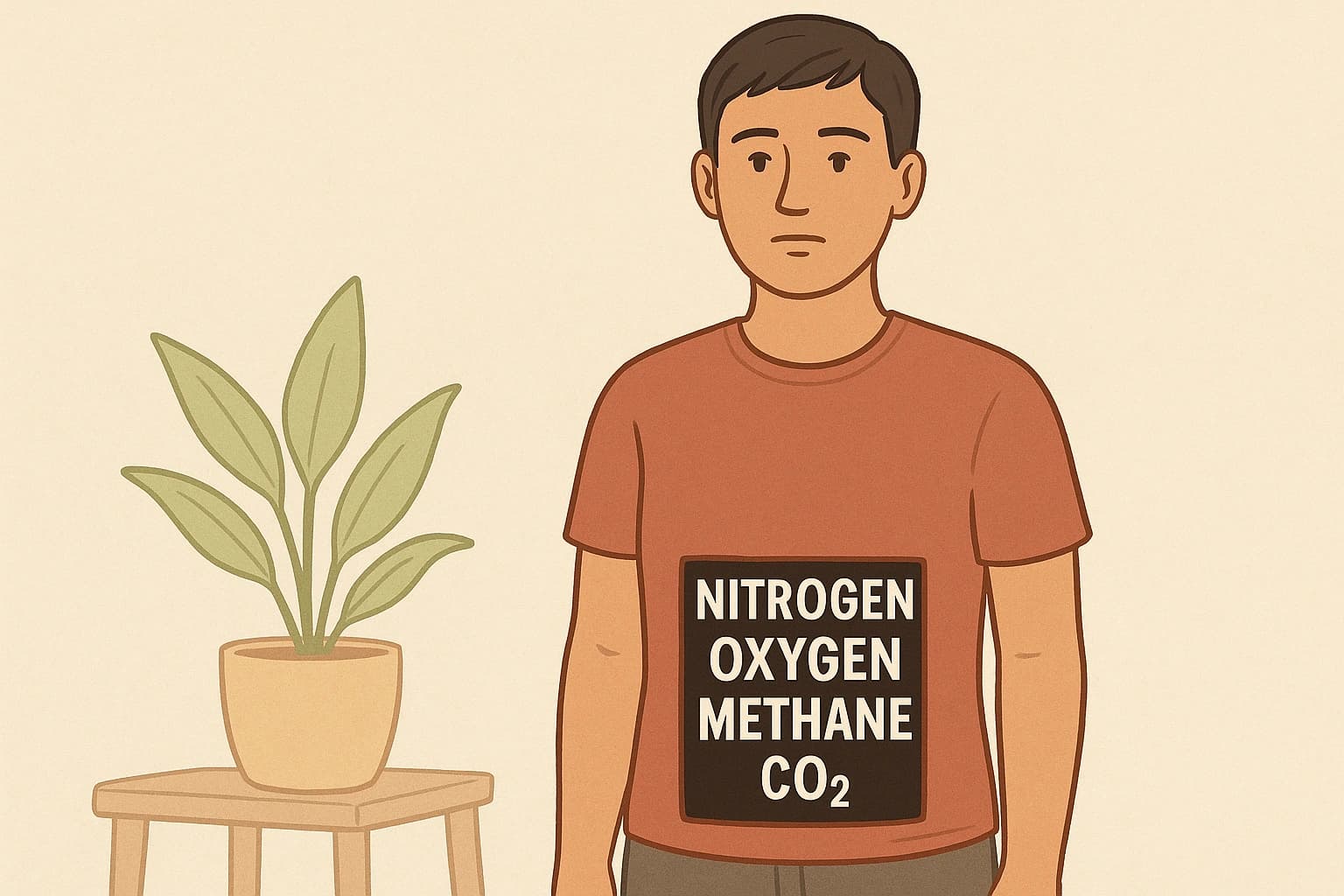
What is a fart, scientifically?
Human gas is mostly nitrogen, oxygen, carbon dioxide, hydrogen, and sometimes methane. Only a tiny slice is the stinky sulfur stuff, but that tiny slice is loud to your nose.
The bacteria in your intestines eat bits of what you ate (especially certain carbs you didn't fully digest). While they break that food down, they burp out gas. You later… return that gas to the room.
Silent vs. trumpet volume is mostly angle, tension, and how fast it escapes — not morality. Quiet gas can still be powerful because sulfur compounds are strong even in teeny amounts.
Why smell sometimes "lingers under the blanket"
Warm, still air traps those sulfur compounds around you. When you lift the blanket, you get a focused blast. That's not infection. It's physics plus timing.
Try a super basic two-day log
You don't have to obsess. Just write one short line a couple times:
- What you ate ("garlic pasta + broccoli, late" / "fast-food burger, fries" / "cereal + milk").
- How the gas smelled (mild / eggy / "whoa").
- How your belly felt (fine / pressure / urgent / actual pain score 0–10).
Check the notes after 2 days. You're only looking for obvious repeats, like "garlic + super-egg smell + belly pressure" or "dairy + sprint to bathroom." That's pattern spotting, not diagnosis.
Mini glossary
FODMAP
A group of carbs some guts don't absorb well. When they reach your lower gut, bacteria throw a party and make gas. Some people with IBS (irritable bowel syndrome) find certain FODMAP groups blow them up.
Lactose intolerance
Your body doesn't make enough lactase enzyme to fully handle dairy. That can mean gas, smell, and urgency — but it's not the same as a dairy allergy.
Gut microbiome
The community of bacteria in your intestines. They help digest food, make vitamins, and also… make smells.
Fiber fermentation
Fiber is plant material you can't fully digest, so bacteria work on it instead. That process makes gas. Slow build is normal; extreme stabbing pain is not.
Reminder: this is general info, not personal medical advice. If you have severe pain, vomiting, fever, blood in stool, black/tarry stool, or sudden big changes, get real medical help.
For exact portion sizes and how to test foods back in one at a time, check the Monash FODMAP app from Monash University — they're the team that originally developed the low-FODMAP diet in clinical research.